PART II : Fatal Stampede Over Relief Rice in Central Tapanuli Highlights Urgent Need for Food Reserves
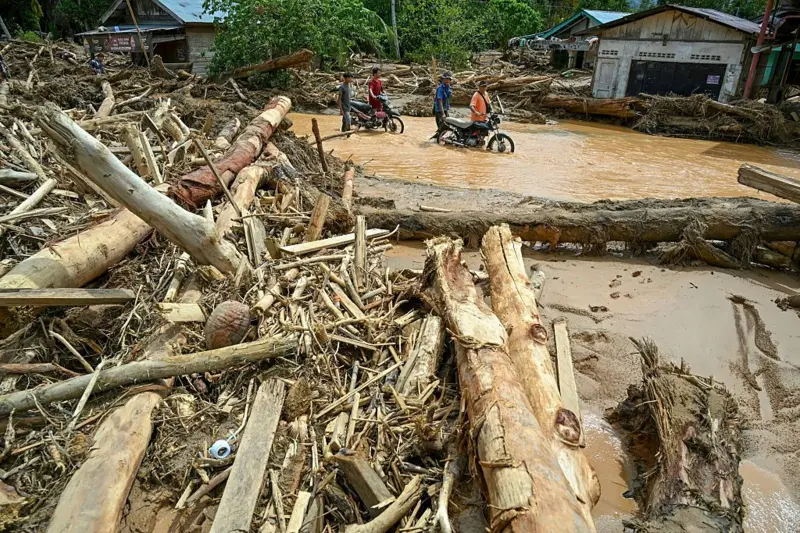
Damai Mendrofa, a resident of Pandan District, Central Tapanuli, said that many locals are now forced to use drainage canals for washing.
“In the canals… it’s painful, it makes you want to cry. I can’t even find the words,” she said, breaking into tears.
Mendrofa fears that using contaminated water could trigger widespread illness, especially as the regional water utility (PDAM) has yet to resume operations.
“People are struggling to drink, struggling to bathe, and their clothes are becoming increasingly unhygienic,” she explained.
Another concern, she added, is the rising risk of diseases caused by pollution. Many residents have begun burning trash in front of their homes.
“If waste collection doesn’t operate properly, burning trash becomes the last resort. But when it's done massively and on a large scale, it can become a serious health hazard,” she said.
Another Central Tapanuli resident, Lodewik F.S. Marpaung, said that some residents are turning to well water, as river water has become completely unusable.
“If we use river water, everything is yellow. It smells polluted because there are so many carcasses,” he added.
‘Develop Regional Food Reserves’
Khudori, a representative of the Indonesian Agricultural Economics Association (Perhepi), suspects that the chaotic scenes at the minimart and Bulog warehouse in Sibolga were triggered by delayed aid deliveries due to isolated road conditions.
“The floods and landslides not only claimed many lives but also destroyed major road infrastructure. When roads are cut off or heavily damaged, logistics distribution inevitably suffers,” he said.
He emphasized that recurring natural disasters such as floods and landslides should push authorities to improve preparedness.
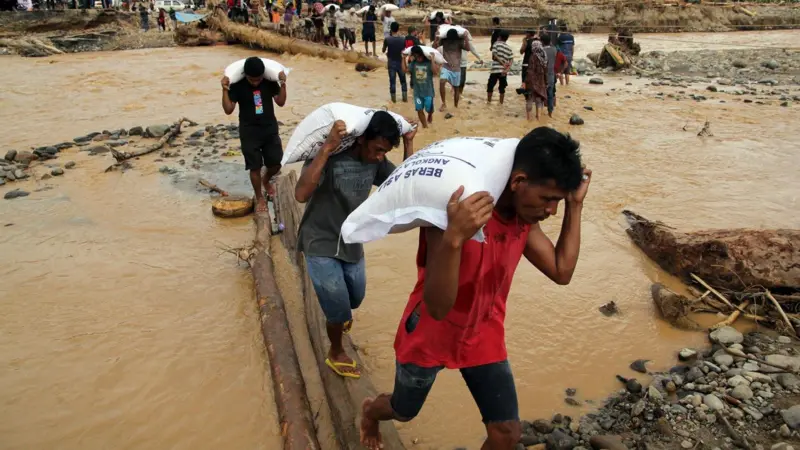
“This time, it’s clear the authorities were overwhelmed by the situation on the ground,” he added.
To address emergency food shortages, the government actually has a mechanism: the Government Food Reserves (CPP). These reserves can be mobilized anytime to support disaster response and post-disaster emergencies.
According to the National Food Agency Regulation (Bapanas) No. 30/2023, nine types of food can be supplied: rice, shallots, chili, poultry meat, poultry eggs, ruminant meat, sugar, cooking oil, and mackerel.
However, the distribution procedure under this regulation remains lengthy.
“It is still very bureaucratic compared to the previous mechanism under the Social Affairs Ministry Regulation No. 22/2019 on distributing Government Rice Reserves (CBP) for disaster and post-disaster emergency response,” Khudori said.
He believes this bureaucratic process slowed CBP distribution to residents.
Under the new procedure, local leaders must submit requests to the National Food Agency, along with data on recipients, distributing agencies, and commitment to covering distribution costs—complete with emergency status documentation.
Once submitted, Bapanas will analyze the request, then assign Bulog or other state-owned food enterprises. If another SOE is assigned, further approval from shareholders or the Minister of SOEs is required.
Khudori recalled the Aceh tsunami in 2004 and the Yogyakarta earthquake in 2006, when Bulog distributed rice immediately, even when electricity and computers were down.
“At the time, officials wrote the request on instant noodle boxes. What mattered was that it was recorded. Once conditions improved, the administration was completed,” he said.
“The point is: procedures are important, but rapid response based on field conditions must be the priority.”
He warned that delays in distributing food, water, and logistics could lead not only to looting but also endanger lives.
“We must not allow lives to be lost because of rigid procedures,” he stressed.
Khudori also highlighted the unequal distribution of food reserves across regions. In fact, such reserves are crucial during emergencies.
“One crucial lesson is that food reserves matter, no matter how small. In urgent situations, they can be mobilized immediately,” he said.
Government Responds to ‘Looting’ Allegations
Social Affairs Minister Syaifullah Yusuf denied accusations of looting at the Bulog warehouses in Central Tapanuli and Sibolga.
“The BNPB chief already clarified that it wasn’t looting; the rice was indeed distributed to residents,” said Gus Ipul, as quoted by Tempo on Tuesday (02/12).
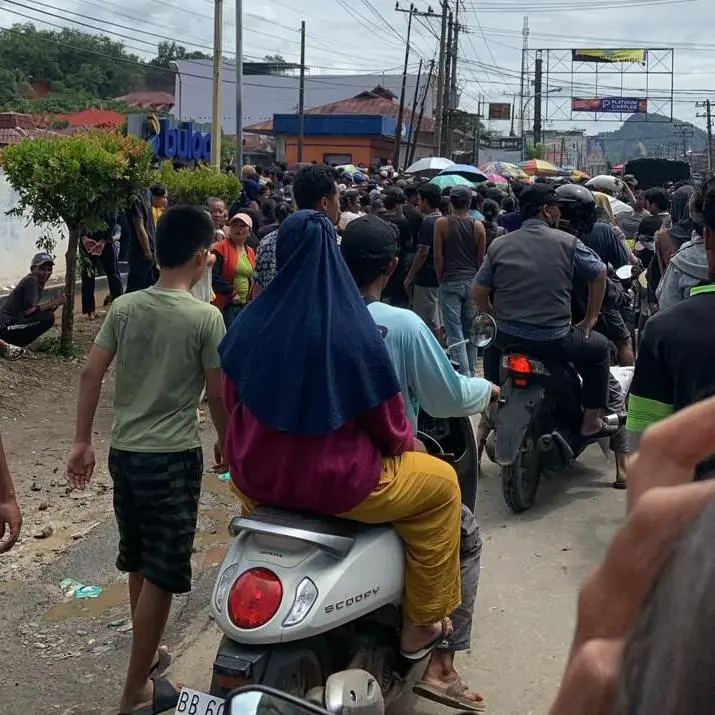
He admitted that logistics delivery to Sibolga and surrounding areas was delayed due to damaged infrastructure and landslide-blocked roads.
“The government is mobilizing all resources under the BNPB Chief’s command, supported by the National Police Chief and the TNI Commander,” he added.
Latest Casualty Update
According to updated data from BNPB on Tuesday (02/12) at 21:04 WIB, the death toll from floods and landslides across Sumatra has risen to 744 people. Additionally, 551 people remain missing, and 2,600 are injured.
In North Sumatra alone, 301 deaths have been recorded, with 163 still missing.
Victims are spread across:
-
Central Tapanuli Regency
-
South Tapanuli Regency
-
Sibolga City
-
North Tapanuli Regency
-
Humbang Hasundutan Regency
-
Pakpak Bharat Regency
-
Padangsidimpuan City
-
Deli Serdang Regency
-
Nias Regency